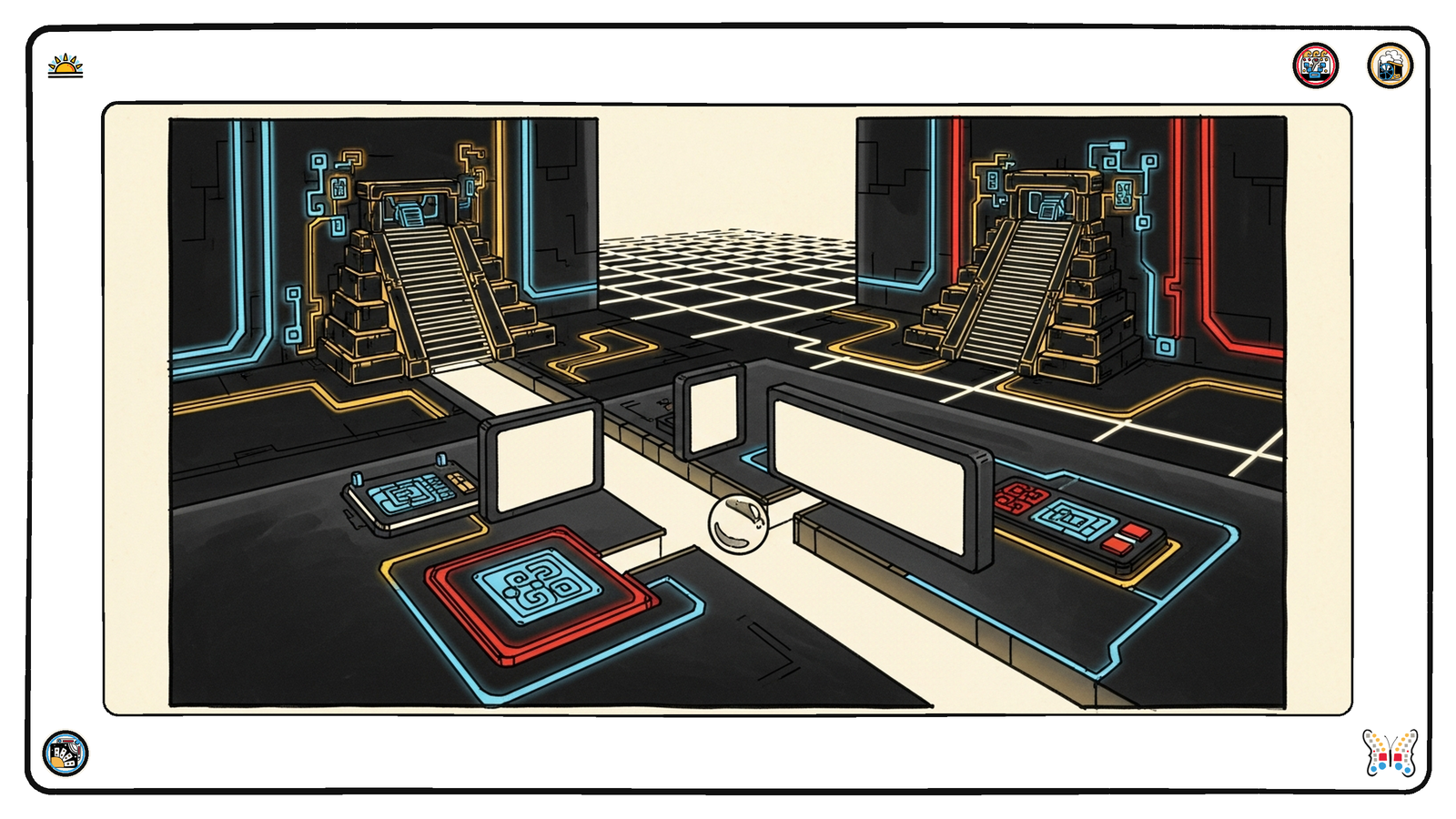
Almost every API tool and ruleset governs what a producer ships: is your API well-formed, documented, and secure? That leaves the most important question of the agent era unanswered — of everything your APIs can do, what should an agent actually be allowed to consume? So we built Context Gate, a browser-first tool that lets you compose and govern exactly the context you expose to agents. No backend, no accounts; it runs in your browser.
Try it → contextgate.apicommons.org
Compose the Surface on Purpose
You start by sourcing your APIs — search APIs.io, fetch from GitHub with your own token, or upload and paste an OpenAPI. Then you make two deliberate choices. First, pick the operations you’ll expose; that selection becomes both the API paths and the MCP tools you offer to agents. Second, control the fields — for each operation, include or exclude individual parameters and request/response schema fields, and flag fields as PII. Excluded fields are pruned from the exposed surface, and excluding a parent object cascades to its children. The context you give an agent is something you compose deliberately, not everything your backend happens to expose.
Three Governed Artifacts
From that selection, Context Gate emits three artifacts that fit together:
| Artifact | What it is |
|---|---|
| Tyk OpenAPI | A self-contained OAS of only the selected operations and kept fields, with the x-tyk-api-gateway extension — upstream, listen path, auth, and per-operation allow / validateRequest / optional rateLimit. |
| MCP tool manifest | One tool per exposed operation, its input schema built from the kept parameters and body. Tyk can serve MCP from the generated OpenAPI. |
| Spectral ruleset | Governance for the exposed surface in tiers — base Tyk OAS validity, extension posture, schema minimization, and the agent-critical checks: PII review, secret-field blocking, no-secrets-in-parameters. |
Consumer-Centric, and It Doesn’t Stand Alone
The rest of the toolchain is producer-centric. Context Gate is consumer-centric — it governs the least-privilege slice of your APIs that reaches an agent, and generates the ruleset to keep that slice honest as it changes. It pairs with the Validator (lint the generated Tyk OAS against the generated ruleset) and Agent Rule Export (hand the rules to the agent). Everything runs client-side; your API descriptions and GitHub token never leave the page.
Context Gate is one of the API Commons tools, open and Spectral underneath like the rest — and it is the capstone of this series, the tool that turns governance around to face the consumer. It’s where the whole run was always headed.